Transit Allies File Lawsuit to Reduce Impact of Brent Spence Bridge Project
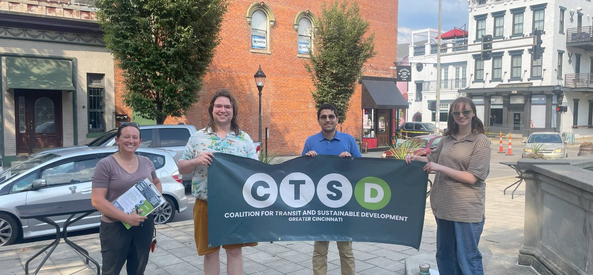
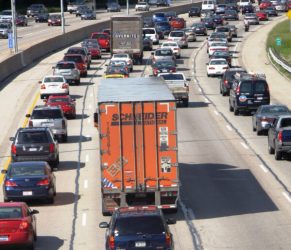
The Coalition for Transit and Sustainable Development (CTSD) was joined by three other green transportation advocacy groups in a lawsuit filed October 15 to demand a full environmental impact statement be prepared on the Brent Spence Bridge project. The current plans call for a new Ohio River bridge, widening along eight miles of interstate, and doubling bridge capacity from eight lanes to 16 lanes. The Miami Group and Northern Kentucky Group both filed comments in March also requesting an EIS. The lawsuit follows a “Finding of No Significant Impact” or FONSI in May.
To promote alternatives that reduce the impact of a new bridge, CTSD launched a public awareness campaign People Over Pavement with several key talking points. “The design of this project is a massive highway expansion, based on data that is over a decade old. This project will bring more lanes, more traffic, and tear down homes and businesses. That means increased air and water pollution, more negative health outcomes, reduced property values and a worse quality of life for already marginalized communities.”
Mackenzie Mason of CTSD explained why the lawsuit was needed: “After considering the devastating future and current environmental impacts of the project, including the disproportionate negative health effects on minority communities from increased air pollution, noise pollution, and flooding, along with the removal of wetlands and forest, and destruction of habitat for endangered species, the Greater Cincinnati Coalition for Transit and Sustainable Development, along with Civic Cincinnati, Ride the Cov, and Queen City Bike, have filed a lawsuit in federal court under the National Environmental Policy Act.”
Leaders with CTSD emphasized they are not looking at stopping the bridge project, but ensuring that the scope and impact are reduced and all transportation options are considered to meet the region’s needs.
“The consideration and comparison of the project with reasonable alternatives required in an (environmental impact statement) is not taking place. These might include expanded transit, like the proposed commuter rail in our region’s North-South Transportation Plan, or other transit options, congestion pricing, and expanded walking and biking facilities to reduce congestion without 16 lanes. Past NEPA lawsuits have resulted in more sound walls, reduction of lanes (or reduced impact), and investment in better public transit infrastructure.”
More information can be found at https://www.sustainablecincy.org/initiative
s/people-over-pavement.